
Travel in Ethiopia is shaped by geography, infrastructure, and local systems that vary across regions. For visitors, understanding how connectivity works is key—not just to moving between destinations, but to appreciating how distance, terrain, and logistics influence the journey itself.
Unlike countries with uniform transport networks, Ethiopia offers a layered system. Air travel, road networks, and locally organized services coexist, each serving a distinct role depending on accessibility and environment. This reflects Ethiopia’s vast scale and diverse landscapes, from highland plateaus to escarpments and lowland plains.
Air Travel and National Links
Domestic aviation is central to Ethiopia’s connectivity. Ethiopian Airlines provides regular flights linking Addis Ababa with major regional hubs. For travelers, flying dramatically reduces travel time—turning what could be long overland journeys to places like Lalibela, Gondar, or Mekelle into quick one-hour trips. Aviation is therefore a cornerstone of travel planning, especially for itineraries spanning multiple regions. Development reports, including those from the World Bank, often highlight the importance of air travel in bridging Ethiopia’s dispersed geography.
Roads and Overland Journeys
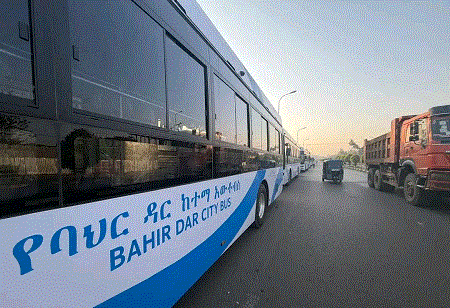
Despite the convenience of air travel, road transport remains essential. Ethiopia’s road network ties cities to rural areas, though conditions vary widely. In the highlands, winding routes through mountains extend travel times, while in lowland regions, seasonal rains can limit accessibility. Yet road travel offers something unique: immersion in Ethiopia’s landscapes and communities. For many visitors, the overland journey becomes part of the adventure, not just a means of getting from point A to B.
Regional Access and Layered Logistics
Reaching specific destinations often requires combining air and road travel. For instance, visitors may fly to Lalibela and then continue by road to nearby sites. Access to Simien Mountains National Park typically involves flying to Gondar before driving into the park. Remote areas like the Danakil Depression demand organized expeditions, where transport and logistics are carefully coordinated for safety and feasibility. This layered approach underscores the need to plan around infrastructure, not just distance.
Infrastructure Growth and Tourism
Ethiopia’s infrastructure is evolving, shaped by national priorities and economic strategies. Improvements in roads, airports, and regional links have expanded accessibility, though progress is uneven. Some regions remain harder to reach, reflecting the interplay of geography, investment, and local conditions. For tourism, this creates both challenges and opportunities: while planning can be complex, the variability preserves a sense of authenticity and adventure.
Local Services and Support Systems
Formal infrastructure is complemented by local service providers. In Addis Ababa, hotels, restaurants, and transport companies form a reliable base for visitors. In regional areas like Lalibela or Simien Mountains, local guides, tour operators, and drivers are indispensable, tailoring logistics to local realities. In extreme environments such as the Danakil Depression, structured transport systems are essential, as independent travel is impractical. Together, these networks create a flexible, context-driven travel system.
Understanding Travel in Context
Connectivity in Ethiopia cannot be understood through standardized assumptions. Travel is shaped by the interaction of infrastructure, geography, and services. For visitors, this means planning involves more than choosing destinations—it requires anticipating how movement between them will unfold. Routes, timing, and logistics all shape the experience, turning travel itself into part of the journey.
Conclusion
Movement in Ethiopia reflects both geographic complexity and ongoing development. Air travel, road networks, and local services combine to make destinations accessible, though not always in straightforward ways. For travelers, awareness of these systems enhances planning and enriches the experience. In Ethiopia, connectivity is not just a logistical detail—it is an integral part of the adventure.