
Understanding Ethiopia’s climate requires more than a simple division into wet and dry seasons. The country’s geography and altitude create a patchwork of climatic zones, each with its own rhythm. For travelers, this means that Ethiopia can feel unpredictable at first, but in reality, its environmental systems follow recognizable patterns that shape when and how journeys are most rewarding.
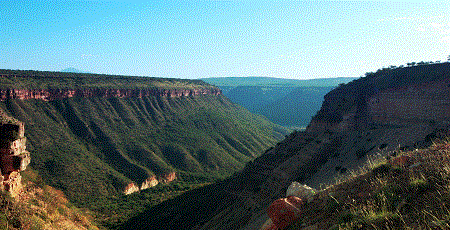
Altitude plays a defining role. Much of the central plateau, including Addis Ababa, sits above 2,000 meters, where daytime temperatures remain moderate and evenings cool throughout the year. In stark contrast, the lowlands of the Danakil Depression regularly exceed 40°C, offering an entirely different atmosphere.
These variations illustrate how elevation determines not only temperature but also humidity and visibility, making Ethiopia a country of multiple climates rather than one unified system. Analyses by the World Bank emphasize this diversity as central to Ethiopia’s geographic identity.
Rainfall, more than temperature, dictates Ethiopia’s seasonal cycles. The main rainy season, known locally as Kiremt, stretches from June to September. During these months, the highlands and northern regions are drenched in sustained rains. Landscapes such as the Simien Mountains become lush and green, though trekking conditions can be challenging and panoramic views less clear.
From October to March, the dry season—called Bega—brings clearer skies, more predictable travel conditions, and easier road access. This is the period most visitors choose for exploring historical sites and natural wonders, though regional variations mean that “dry” does not always look the same everywhere.
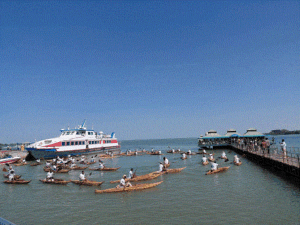
Regional differences are striking. Lake Tana, for example, experiences rainfall patterns distinct from the surrounding highlands, while parts of the Rift Valley often remain relatively stable even when other areas are affected by heavy rains. This diversity makes it essential to plan trips around specific destinations rather than relying on generalized seasonal advice. A journey that combines highland trekking, lowland exploration, and lakeside visits may involve transitions across entirely different climatic systems.
Seasonality in Ethiopia is also cultural. Major religious festivals, such as Timket in January, coincide with the dry season, drawing thousands of participants and visitors. These events are not staged for tourism but are integral to community life, adding depth to the travel experience. The UN World Tourism Organization highlights how cultural seasonality influences travel patterns in destinations where heritage and tradition remain actively practiced.
Infrastructure responds to these seasonal shifts. Roads in rural and highland areas can deteriorate during the rainy months, slowing travel and limiting access. In the dry season, overland routes become more reliable, making movement between destinations easier. Domestic flights, operated by Ethiopian Airlines, provide consistent connectivity across regions, allowing travelers to bypass some of the challenges posed by seasonal road conditions.
Visitor services also reflect these dynamics. In Addis Ababa, hotels, restaurants, and transport operate year‑round, offering a stable base. In regional destinations such as Lalibela or the Simien Mountains, services often align with seasonal demand, with guides, lodges, and tour operators adjusting their availability. In more extreme environments like the Danakil Depression, specialized tours and logistical support remain essential regardless of season.
So when is the best time to visit Ethiopia? The answer depends on your priorities. If you seek clear skies and accessible roads for exploring historical sites or trekking, the dry season is ideal. If you are drawn to dramatic landscapes and the transformation of nature, the rainy season offers a different, though less predictable, experience.
Rather than searching for a single “best time,” it is more accurate to think of travel timing as a process of alignment—matching destinations with the conditions that best support the journey you want to have.
Ethiopia’s climate is complex, but that complexity is part of its appeal. With careful planning, travelers can navigate its diversity and discover a country where every season brings its own rewards.